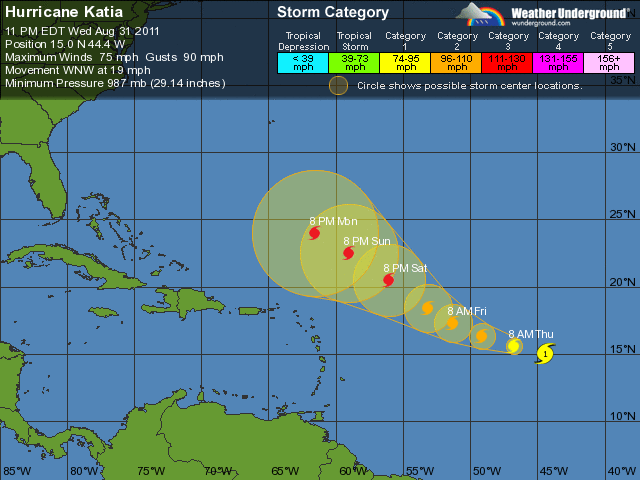
Hurricane warning issued for Bermuda as Igor approaches
At 500 pm on Friday September 17, 2010 the center of Hurricane Igor was located near latitude 23.7 North, longitude 61.1 West. Igor is moving
toward the Northwest near 10 mph. This general motion
with some increase in forward speed is expected tonight and
Saturday followed by a turn toward the North-Northwest late
Friday or early Saturday.
On the forecast track the center of
the hurricane will be approaching Bermuda on Sunday.
Maximum sustained winds have decreased to near 105 mph (165
km/hr) with higher gusts. Igor is a category two hurricane on the
Saffir-Simpson hurricane wind scale. Slight strengthening is
possible during the next day or so followed by a gradual
weakening.
Igor is an unusually large hurricane. Hurricane force winds extend
outward up to 105 miles from the center and tropical
storm force winds extend outward up to 345 miles (555 km.
Estimated minimum central pressure is 947 mb...27.96 inches.
At 500 pm the center of Hurricane Julia was located
near latitude 25.2 north,longitude 48.2 west. Julia is moving
toward the West-northwest near 18 mph. A turn toward the Northwest
and North-northwest is expected tonight and Saturday followed by
a turn toward the North on Sunday.
Maximum sustained winds have decreased to near 75 mph (120
km/hr) with higher gusts. Julia is a category one hurricane on
the Saffir-simpson hurricane wind scale. Continued gradual
weakening is forecast during the next 48 hours.
Hurricane force winds extend outward up to 35 miles (55 km) from
the center and tropical storm force winds extend outward up to 115
miles(185 km).
Meanwhile an area of showers and thunderstorms located a couple hundred miles south of the Cape Verde islands is associated with a broad low pressure system.
Environmental conditions appear conducive for
some slow development of this low during the next couple of days as
it drifts west-northwestward. There is a low chance 10 percent
of this system becoming a tropical cyclone during the next 48
hours.
September 14, 2010; 5:00 P.M
Igor remains category four Hurricane Julia stregthens
At 500 P.M on Tuesday, the center of hurricane Igor was located
near latitude 18.8 north,longitude 53.1 west. Igor is moving
toward the West-northwest near 8 mph. This general motion
is expected to continue tonight followed by a gradual turn toward
the Northwest by Wednesday afternoon.
Maximum sustained winds are near 145 mph (230 km/hr) with higher
gusts. Igor is a category four hurricane on the
saffir-simpson hurricane wind scale. Some fluctuations in
intensity are possible during the next 48 hours but Igor is
expected to remain a very powerful hurricane through Thursday.
Hurricane force winds extend outward up to 45 miles from
the center and tropical storm force winds extend outward up to 205
miles.
Surf large swells generated by Igor will begin affecting the
Leeward Islands today and will reach Puerto Rico and the Virgin
Islands tonight and Wednesday. These swells are likely to cause
life-threatening surf and rip current conditions.
Meanwhile Hurrice Julia is situated about 405 miles West Nort-West of the Cape Verde Islands with maximum sustained winds of 85 mph (140 km/hr), moving West North West at 9 mph.
September 12, 2010; 5:00 P.M
Igor is now a major category four hurricane
Hurricane Igor ballooned into a major category four Atlantic Ocean hurricane on Sunday with top winds of 135 mph (215 km/h), but remained far from land.
On its current track, Igor should pass well North of the Leeward Islands but may threaten the Eastern United States later this week.
At 2 p.m. ET, the storm was about 1,120 miles (1,800 km) east of the Leeward Islands and was moving west at about 14 mph (22 km/h). The storm could still gain some strength as it moves Westwards.
Hurricane-force winds extended up to 40 miles (65 km) from Igor's center, and tropical storm force winds can be felt up to 160 miles (260 km). As of Sunday morning, no coastal watches or warnings were in effect, and the storm is expected to turn to the west-northwest in the next two days.
Meanwhile, in the far eastern Atlantic, Tropical Depression 12 formed Sunday morning. As of 2 p.m. ET, its center was about 190 miles (305 kilometers) southeast of the southernmost Cape Verde Islands. The depression's maximum sustained winds were at 35 mph as of 2 p.m. ET.
Tracking maps show the depression becoming Tropical Storm Julia later Sunday or Monday and moving into the open Atlantic, becoming a Category 1 hurricane next week.
September 11, 2010; 8:00 P.M
Igor nears hurricane strength may threaten Eastern Caribbean
Tropical storm Igor was on Saturday chugging towards the islands of the Caribbean with sustained winds of 70 MPH.
Forecasters said that the storm would likely become a hurricane late Saturday night or early Sunday morning. Igor was also expected to become a major hurricane by late Monday.
While Igor currently threatens no land area, its current path as it moves Westwards from the coast of Africa should take it to the vicinity of the islands of the Eastern Caribbean.
At 5 P.M on Saturday, the tropical storm was located some 1120 miles east of the Leeward Islands.
Meanwhile, another area of disturbed weather formed just off the coast of Cape Verde and it was expected to become a tropical cyclone in the next 48 hours.
In the Caribbean Sea, a wide area of disturbed weather formed on Saturday with heavy rains impacting the Leeward Islands. Forecasters warned residents of the Dominican Republic and Puerto Rico to be on the lookout for heavy r rains and the possibility of mudslides.
It is quite likely that conditions could worsen and the area of disturbed weather could become a tropical cyclone within 48 hours.
September 08, 2010; 2:00 P.M
Another tropical depression about to form in Atlantic
Shower and thunderstorm activity is continuing to organize near a
well-defined low pressure area located just South of the
Southernmost Cape Verde Islands. Strong upper-level winds over
this system are expected to decrease over the next couple of
days and this low has the potential to become a tropical
depression over the next day or so.
There is a high chance (70
percent) of this system becoming a tropical cyclone during the
next 48 hours as it moves westward at 10 to 15 mph.
The remnants of Gaston located a couple hundred miles southeast of
the Dominican Republic are producing disorganized shower and
thunderstorm activity. Development of this system is not expected
as it moves Westward at 10 to 15 mph.
There is a low chance near 0 percent of this system becoming a tropical cyclone again
during the next 48 hours.
Elsewhere, tropical cyclone formation is not expected during the
next 48 hours.
September 01, 2010; 2:00 P.M
New tropical depression forms in Atlantic as Earle threatens the US
At 2:00 P.M on Wednesday, the center of tropical storm Fiona was located near latitude 19.3 North, Longitude 62.2 West or some 90 miles Northeast of Anguilla.
Maximum sustained winds are near 60 MPH with higher gusts, and it could strengthen some more. A tropical storm warning remains for St Marten while Antigua, St.Kitts and the other Leeward islands are under tropical storm watch.
Tropical depression nine formed this morning outside the coast of Cape Verde and is moving toward the Caribbean with sustained winds of 35 MPH. It is expected to develop into a cyclone within the next 48 hours and could threaten the Windward and Leeward Islands.
Meanwhile, Hurricane Earle is now a category three hurricane and it is threatening the coast of North Carolina and Virginia as residents begin to take precautions against a potentially dangerous storm.
August 31, 2010;12:00 P.M
Tropical Storm warning issued for St Marten as Fiona strengthens more activity in Atlantic
Authorities in St Marten have issued a Tropical Storm warning as Fiona makes its way to the Northern Leeward Islands. At the same time, a Tropical Storm watch is in effect for Antigua, Barbuda, Montserrat, St. Kitts and Nevis, Anguilla, St Eustacius and Saba.
At 11:00 A.M. on Tuesday, Tropical Storm Fiona was located some 190 miles East South east of the Leeward Islands or near latitude 15.9 North Longitude 55.3 West.
Maximum sustained winds are at 40 MPH and some strengthening is expected over the next day or so. On the forecast track, The center of Fiona will pass to the Northeast of the Northern Leeward Islands early Wednesday.
Meanwhile, another area of disturbed weather has formed off the African coast and is showing signs of becoming better organized. The broad area of low pressure located about 400 miles Southwest of the cape Verde Islands is producing showers and thunderstorm activity.
Development of this system, if any, is expected to be slow to occur as it moves Westward towards the Caribbean. There is a low chance 10 percent of this system becoming a tropical cyclone over the next 48 hours.
Hurricane Earl continues to pose a threat to the Eastern coast of the United States as it leaves the Caribbean with winds of over 135 MPH. It is expected to maintain category 4 status as it moves towards the United States.
August 30, 2010;9:00 P.M
Tropical storm Fiona forms as Earl bears down on the United States
Just a day after Hurricane Earl buffeted the Leeward Islands with 75 MPH winds, another system is threatening the islands.
Tropical storm Fiona packing winds of 40 MPH was located just 890 miles East Southeast of the Leeward Islands.
Forecasters expect Fiona to be near or just to the Northeast of the Northern Leeward Islands by early Wednesday.
Meanwhile, Hurricane Danielle buffeted the Leeward Islands and Puerto Rico and was upgraded to a category 4 hurricane as it made its way towards the East coast of the United States.
August 30, 2010;9:00 A.M
Hurricane Earl strengthens continue to pose threat to Northern Leeward Islands
At 8:00 A.M. on Monday, the center of Hurricane Earl was located near Latitude 18.4 North Longitude 62.9 West.
Earl is moving toward the West-Northwest near 14 MPH and is expected to turn toward the Northwest by Tuesday.
On the current track the center of Earl will pass near or over the Northernmost Leeward Islands this morning and near the Virgin Islands this afternoon and this evening.
Earl is a category two hurricane with sustained winds of 110 MPH and is expected to strengthen further during the day.
Meanwhile, the area of disturbed weather making its way toward the Caribbean is becoming better organized and now has a 90 percent chance of becoming a cyclone over the next 48 hours.
Hurricane Danielle continues to pose no threat to any land mass and maximum sustained winds are now at 75 MPH. Danielle is expected to weaken further today and lose its tropical characteristics.
August 28, 2010;9:00 P.M
Residents of Leeward Islands Prepare for Hurricane Earl
Residents of the Northern Leewards are tonight bracing themselves for the onslaught of Hurricane Earl.
Forecasters predict that Earl will begin to affect the Islands from Antigua to St Marten by Sunday afternoon.
Conditions are good for a further strengthening of the storm and it is predicted that winds will top 85 MPH by the time it reaches the islands on Sunday.
At 800P.M. on Saturday, Earl was still a tropical storm with maximum sustained winds of 65 MPH.
August 28, 2010;8:00 A.M
Earl threatens Leeward as another cyclone develops in the Atlantic
The National Hurricane Center in Miami has issued a tropical storm watch for St Marten, St Barthelemy, Antigua, Barbuda, Montserrat, St Kitts and Nevis, Anguilla, Saba and St Eustatius.
The warning was issued as Tropical storm Earl packing winds of 60 MPH approached at about 800 miles to the South of the Islands.
At 8:00 A.M. on Saturday, Earl was situated at Latitude 15.8 North Longitude 51.2 West, and could approach the Northern Leeward Islands on Sunday night. It could become a hurricane by Sunday night.
A tropical storm watch means that tropical storm conditions are possible within the watch area generally within 48 hours. Residents of the Northern Leeward Islands should therefore exercise caution and keep a close watch on the movement of Tropical storm Earl.
Meanwhile, Hurricane Danielle packing winds of 110 MPH is expected to pass well to the East of Bermuda later today and tonight. It should not pose any further threat to land and should begin to gradually weaken by Sunday night.
A broad low pressure system associated with a vigorous tropical wave is located about 250 miles southwest of the Southernmost Cape Verde Islands.
Environmental conditions remain favorably for a tropical depression to form during the next couple of days. There is an 80 percent chance of this system becoming a tropical cyclone during the next 48 hours.
August 27, 2010;11:00 A.M
Earl may develop into hurricane by Sunday
At 11:00 A.M. on Friday the center of Hurricane Danielle was located near latitude 26.9 North, Longitude 59.8 West. Danielle is moving toward the Northwest with maximum sustained winds of 135 MPH.
It is forecast to past well to the East of Bermuda by Saturday night and drift further into the Atlantic, not posing any threat to land.
The Centre of Tropical storm Earl was located near latitude 15.7 North Longitude 43.6 West, or about 1200 miles from the Northern Leeward Islands.
Earl is moving slowly toward the Caribbean islands with sustained winds of 45 MPH and it is expected to develop into a hurricane by Sunday. Tropical storm winds extend outward up to 85 miles.
The area of disturbed weather outside the coast of Cape Verde is becoming better organized and now has a 70 percent of chance of developing into a tropical storm within 48 hours.
August 26, 2010;2:00 P.M
Danielle could become major hurricane as two other areas of disturbed weather crowds the Atlantic
At 1100 A.M. on Thursday, Hurricane Danielle with maximum sustained winds of 105 MPH was headed North and forecasters issued a storm watch for Bermuda.
Danielle is expected to strengthen further and become a major hurricane by tonight or Friday.
Meantime, Earl, which grew out of a tropical depression that formed over the far eastern Atlantic yesterday, is about 615 miles west of the southernmost Cape Verde Islands.
Maximum sustained winds are near 40 miles per hour and the hurricane centre said Earl is forecast to become a hurricane by late Friday.
Yet a third area of disturbed weather has come out of Africa with a tropical wave centered about 450 miles Southeast of the Southern Cape Verde Islands.
This system shows signs of organization and conditions are conducive for additional development over the next two days. There is a 20 percent chance of this system becoming a tropical cyclone as it works its way toward the Caribbean.
August 24, 2010;8:00 A.M
Hurricane Danielle threatens Caribbean with 100 MPH winds
At 5:00 AM on Tuesday August 24, 2010, Hurricane Danielle was located near Latitude 15.9 North, Longitude 44.6 West or 1100 miles East of the Lesser Antilles.
Danielle has been upgraded to a category two hurricane with winds approaching 100 MPH, and is forecast to strengthen significantly in the coming hours becoming a major hurricane by Wednesday.
Meanwhile, a low pressure area about 100 miles South of the Cape Verde islands is becoming better organized and may form into a tropical depression within the next 48 hours.
August 23, 2010;11:30 P.M.
Hurricane Danielle expected to become major hurricane
At 1100 P.M. on Monday August 23, 2010, hurricane Danielle with winds of 85 miles per hour was making its way towards the Caribbean.
Danielle was located near latitude 15.6 North, longitude 43.2 or about 800 miles from the Lesser Antilles. It is moving toward the West-Northwest near 20 MPH, and is expected to turn toward the Northwest by late Tuesday.
Additional strengthening is likely and Danielle is forecast to become a major hurricane by late Tuesday.
Meanwhile, a broad area of low pressure associated with a tropical wave located about 350 miles Southeast of the Cape Verde islands continues to show signs of organization.
This system could become a tropical depression during the next day or two as it moves West-Northwest at about 15 MPH.
There is a 60 percent chance of this system becoming a tropical cyclone during the next 48 hours.